Books
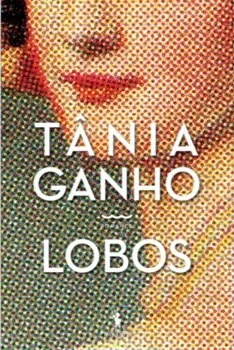
Lobos (Wolves, 2025)
A forensic anthropologist and a reclusive war correspondent confront human cruelty amid the unseen terrors of the digital world.
Praised for its literary power and emotional depth, Lobos is a fearless and gripping novel that dives into the darkest truths of our time—war, sexual violence, and the hidden terrors of the digital age. Through the interwoven lives of a forensic anthropologist, a reclusive war correspondent, a traumatized teenager, and a mother unraveling, Tânia Ganho crafts a story as raw as it is beautifully written.
Fedra, a forensic anthropologist, returns home after two decades in war zones, only to face the bleak loneliness of investigating crimes on the dark net. Stefan, a former war correspondent, now lives as a recluse in the forest, haunted by the cruelty he once witnessed. Fourteen-year-old Leonor retreats into silence after being the victim of a sexual crime, while her mother Helena spirals into obsession. At the heart of their tangled stories is Amelia, a woman on the edge of life and memory who holds the key to a mystery that may never be solved.
"Lobos is a flawlessly crafted book, thoroughly researched and intricately woven—a work unafraid to confront the dark core of some of the most uncomfortable realities of our time. It does so with admirable precision, courage, boldness and humanity."
– José Mário Silva, Expresso
"A novel that deserves an award (if not the ‘Grand Prize’) for the literary quality of its writing. (With) strong female and male characters, Lobos achieves excellence through the intricate web woven between them all. A return to the old spirit of the novel as a narrative exposing social evils (…) revealing how Evil is lodged in the heart of man."
– Miguel Real, Jornal de Letras
“Tânia Ganho, one of the most distinguished contemporary Portuguese writers, stands out for combining clear, fluid prose with a commendable focus on essential themes that address social and existential issues of everyday life.Throughout the novel, the female body serves as a leitmotif: a living, erotic, sexually awakened, wild body—or its opposite: dead, mutilated, violated, shattered. n Lobos, there is no complacency or sentimentality. The author fearlessly confronts the harsh reality of evil and the possibility of redemption, which can only be found in a space of regeneration, tied to nature.”
– Helena Vasconcelos, Público
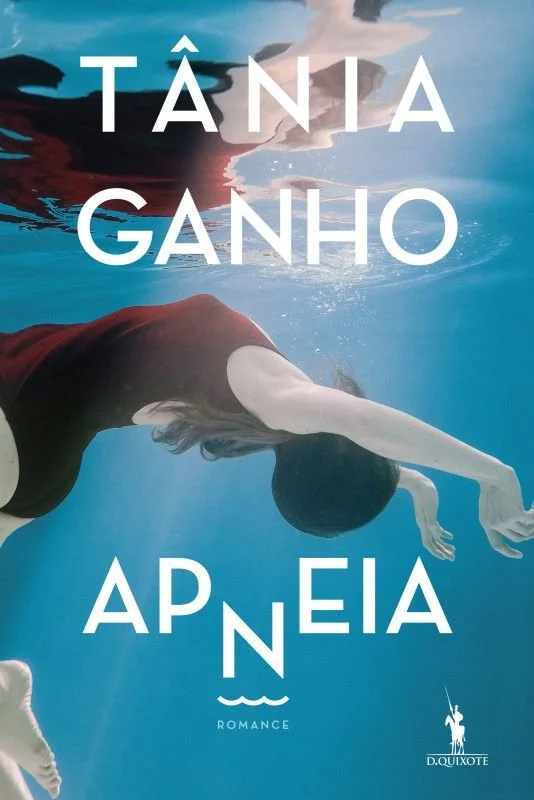
Apneia (Apnea, 2020)
“They were a family. Father, mother, son: sacred in the eyes of the law. The toxic trinity.”
Apnea is a suspenseful and chilling descent into the brutal realities of spousal and parental violence. Written with stark clarity, this intense and disturbing novel exposes the hidden war inside broken families with haunting authenticity.
When Adriana finally finds the courage to leave her husband, taking their five-year-old son with her, she believes she’s taking the first step toward freedom. But Alessandro refuses to let go—and what follows is a descent into a nightmare she never imagined: a custody battle where love, truth, and justice are pushed to their breaking point.
Apnea plunges readers into the harrowing reality of domestic abuse and the silent suffering behind legal proceedings. It lays bare the fragile limits of human endurance and exposes a justice system that can feel indifferent, opaque, and devastatingly slow.
Written with stark clarity and emotional restraint, this unsettling novel offers an unflinching look at the quiet war fought within broken families. Many readers will recognize their own pain in its pages—and feel the quiet strength of a story that dares to speak the unspeakable.
“Apneia offers a raw, unsettling glimpse into the twisted mind of an abuser. Be warned: it’s a gut punch.”
– Ana Rute Primo, “Boas Leituras” blog
“In Apneia, the relentless pace of events illustrates the limits of what is psychologically bearable and calls for an urgent realignment between the letter of the law and the boundaries of human dignity.”
– Luísa Mellid-Franco, Expresso
“Apneia is a necessary novel that addresses problematic, complex, and highly prevalent themes not only in Portuguese society but also in a much broader global context. … A novel about the ‘art of surviving’.”
– Jorge Vicente Valentim, “The Signs Were All There: Violences and Abuses in the Brand New Portuguese Fiction – Brief Reflections on Apneia by Tânia Ganho”
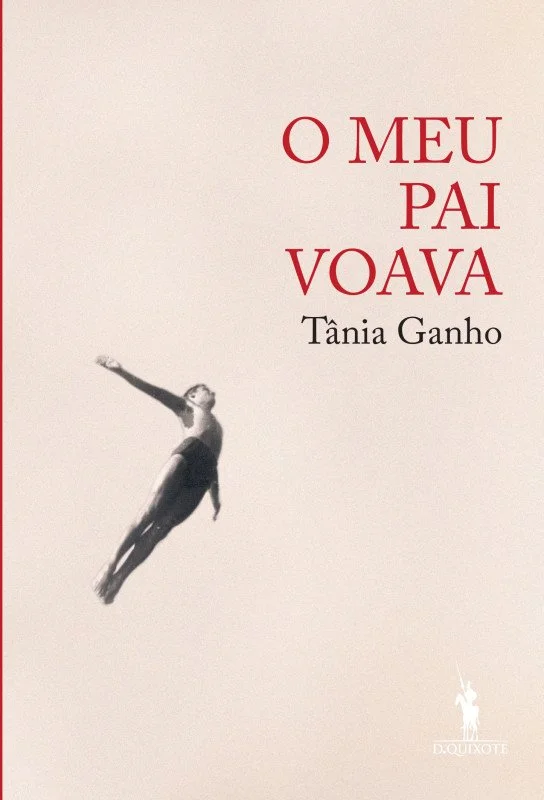
O Meu Pai Voava (My Father Could Fly, 2024)
A personal tribute to a father that easily resonates with any reader who has suffered a similar loss.A courageous, deeply intimate account.
“How can I describe him in just a few lines? He was a black belt in karate, a mountaineer, an astronomer, an award-winning inventor, an extraordinary doctor. He knew Pessoa’s The Tobacco Shop by heart, told jokes like no one else, raised silkworms on the balcony, conducted experiments with pig bladders and suture kits (…)”
“I find myself wondering whether my father’s death belongs to the private realm or the public sphere. Whether 21st-century etiquette requires me to announce it on social media — following the same convention that still dictates we publish the obituary in the local newspaper — or whether I’m allowed to sink into silence for days, weeks, because it’s a private event, something that belongs only to me. It is mine. How far do our dead still belong to us?”
– Tânia Ganho, My Father Could Fly
What a beautiful and moving read. An emotional, cathartic tribute-book — from a daughter to a father who, though he has left, will not “die.” Like Apneia, this is a tough book… written with Tânia Ganho’s signature sensitivity, elegance, and courage.
– Miguel Pestana, “Silêncios que falam” blog
The author turns the grieving process into a shared experience. Deeply intimate, the book offers a contemplation on the human condition. It is through this universality of grief — one of the few experiences capable of uniting very different people — that the reader of My Father Could Fly comes to make their own a sorrow that, at first, seemed so distant.
– Sérgio Almeida, Jornal de Notícias
In the lineage of other books born out of grief — and which the author references throughout the text (from Joan Didion to Rosa Montero, including Annie Ernaux) — this book begins with an absence and searches for its meanings, all the while constructing something far beyond loss.
– Sara Figueiredo Costa, Ponto Final Macau
In a measured and restrained prose, memories are unraveled and a memory album is reconstructed. By the end, the opening message still echoes: it is through writing that we rebuild ourselves, and it is through writing that we survive — both the one who writes, and the one who is written.
– Paulo Nóbrega Serra, Expresso
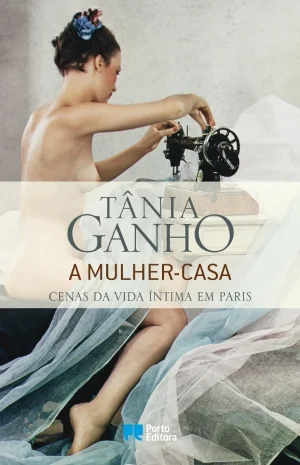
A Mulher-Casa (Woman House, 2012)
A Mulher-Casa is a magnificent narrative about the life of Mara, a new and highly modern Madame Bovary. (…). A beautiful realistic novel.
— Miguel Real, Jornal de Letras
She is an unknown hat maker; he is a ghostwriter for minor politicians and shady public figures. When they swap quiet Aix-en-Provence for the imposing Paris, they bring with them a whole baggage of dreams and promises of glamour. However, her husband's growing professional success quickly reduces Mara to the role of mother and housewife, dragging her into an abyss of loneliness and disenchantment.
It is then that Mara becomes involved with Matthéo, a young chef, and suddenly finds herself entangled in a spiral of contradictory feelings where loyalty, lust, and duty frame agonizing questions: can an adulterous woman be a good mother? Can she hope that this forbidden love will save her from herself and her lack of faith?"
Mara, the heroine – or more properly the anti-heroine – of the story, is herself a building, a construction, a successive composition of girl, woman and mother who is in turn enclosed within another construction (a confined, institutional, military establishment, the École Militaire) in a city, Paris, whose most famous landmark is the Eiffel Tower, an obviously phallic symbol of male power which dominates the view from Mara’s window, constantly changing with the weather, the light, the time of day or night.
The suspense is kept up until the final page (the author’s ability to maintain narrative tension is one of the many virtues of this novel) and it stems from the harrowing dilemmas with which Mara is faced at every turn. Does a woman’s love for a man mean she has to abandon her career, her desire for creativity? What place does maternity have in the life of a woman?
Apart from being an extremely cultured writer and being able with great skill to include references in the narrative to artists (Louise Bourgeois, Annete Messager, Camille Claudel, Sylvia Plath), to history, to settings (A Mulher-Casa could almost be a visitor’s guide to Paris), Tânia Ganho touches time and again on contemporary issues, such as the status of women, motherhood, adultery, the needs of the female body, and cleverly puts a political twist on the themes of hypocrisy, duplicity and scandal.
Tânia Ganho has written a modern fairy tale, subverting certain presuppositions with elegance and irony. There is no doubt that the story is about a princess, married to a prince who serves a king, locked up in a golden castle.
— Helena Vasconcelos, notes on the presentation of “A Mulher-Casa”
http://leituraemcomunidade.blogspot.pt/search?q=mulher-casa
Tânia Ganho explores the meanders of political corruption and the venality of European politicians, taking inspiration from the recent case of alleged sexual abuse involving Dominique Strauss-Kahn
— Miguel Real, Jornal de Letras